
Animal Science, MS
The Master of Science in Animal Science offers specializations in animal physiology—such as nutrition, reproduction, and stress—and animal health and well-being, including immunology, genomics, and behavior. Our program features several graduate research faculty dedicated to supporting your academic and career development.
Program Overview
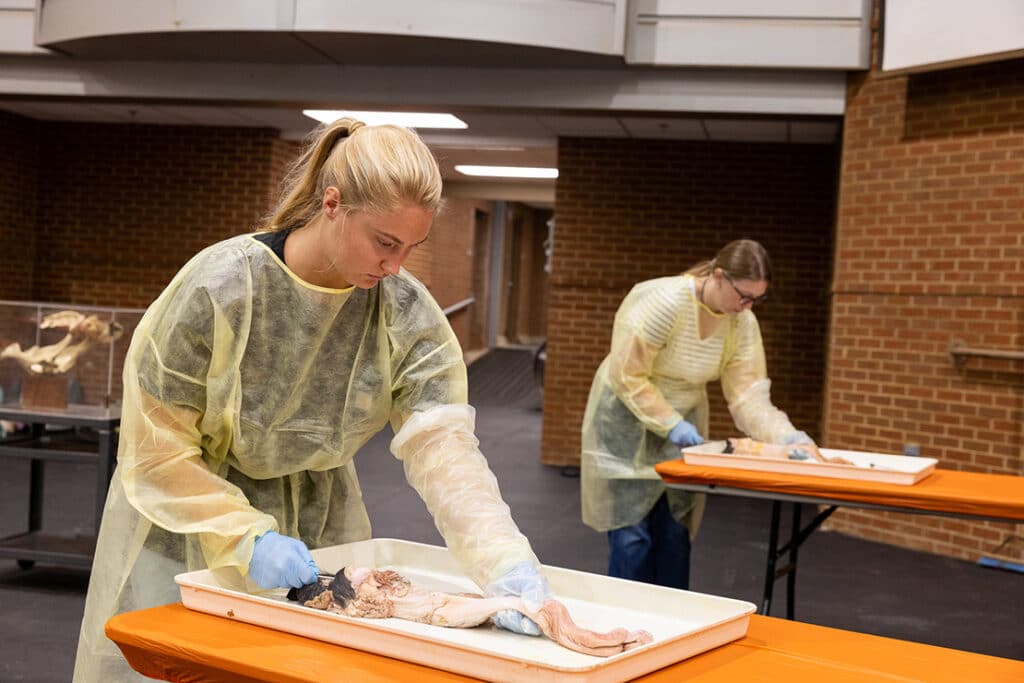
The animal science master’s degree develops individual skills and personalizes college courses to prepare students to be competitive in the diverse field of animal science. With a program emphasis on the importance of experiential learning with different animal species, students will engage in learning experiences with many livestock animals, like beef and dairy cattle, poultry, swine, and sheep.
Coursework and research prepare students for the investigation of fundamental problems associated with animal production and strengthen knowledge in animal science, chemistry, biochemistry, biology, microbiology, genomics, and statistics.
Diverse research opportunities and unique opportunities for animal science students allow for an individualized program with helpful and accessible faculty and staff.
Concentrations
Students in this graduate program pursue a general degree in animal science.
Why study Animal Science?
Student Funding Opportunities
There are multiple opportunities for students to finance their master’s degree in animal science, like teaching assistantships, research assistantships, and biweekly payroll assignments.
Cutting-Edge Research
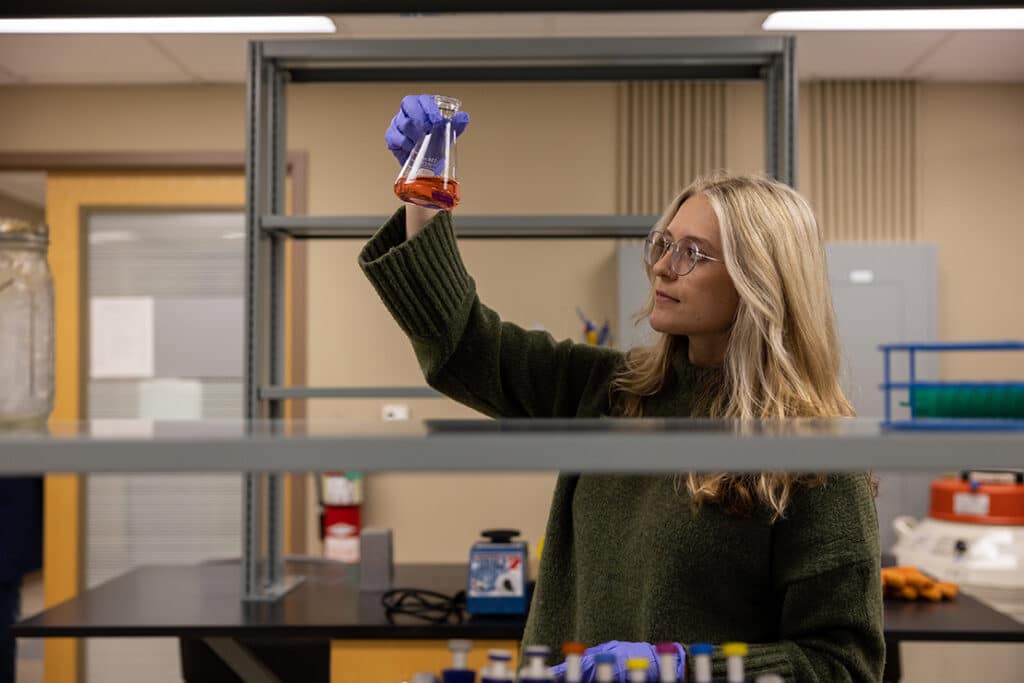
Through the thesis track program, students engage in research projects within the animal science industry, utilizing state-of-the-art on-campus facilities. Research areas include animal health and welfare, genetics and genomics, nutrition physiology, and reproductive physiology.
Professors in the department have dual appointments in teaching and research, making valuable experiences easily accessible for students.
Dual Degree
The Department of Animal Science offers an accelerated five-year BS/MS program, designed to help you earn both a bachelor’s degree and a thesis-based master’s degree in animal science efficiently. You can take up to nine graduate credits during your senior year that count toward both degrees. Students are considered for conditional admission during or right after their third undergraduate year, with exciting opportunities to start your own research project alongside a supportive graduate advisory committee. To get started, simply complete the “Animal Science Conditional Admission 5 Year BS-MS” form, which requires signatures from you, your advisory committee, the graduate director, and the undergraduate coordinator before submission to the Graduate School.
What can you do with a degree in Animal Science?
Graduates work in areas such as animal pharmaceuticals, nutrition, reproduction, genetics, farm and animal management, food safety, and veterinary medicine. Potential job titles include but are not limited to animal nutritionist, geneticist, reproduction specialist, veterinary technician, livestock manager, pharmaceutical sales representative, food safety specialist, research scientist, Extension agent, and farm operations manager, among others. This thesis-based program also provides excellent preparation for those interested in pursuing a PhD in animal science.
Featured Courses
ANSC 420 – Advanced Reproductive Techniques
Collection, evaluation, and preservation of ova, spermatozoa and embryos; application of methods of natural breeding and techniques of artificial insemination and embryo transfer; herd sire and dam evaluation; pregnancy determination; gestation and parturition; infertility; recent advances in theriogenology.
ANSC 519 – Techniques in Molecular Biology
Conventional and modern techniques for DNA cloning and manipulation, mRNA expression and analysis, protein expression and analysis, various omics techniques, and bioinformatics tools. Labs will include comprehensive DNA cloning procedure, recombinant protein construction/purification as well as SDS-PAGE/immunoblotting analysis, real-time RT-PCR, and use of software for common genomics and bioinformatics analyses.
ANSC 520 – Animal Physiology
Major body systems and interrelationships: nervous, muscle, blood, cardiovascular, kidney, respiratory, gastrointestinal, and endocrine. Concepts of metabolism, temperature regulation, and acid-base balance.
ANSC 580 – Animal Behavior and Welfare
Explores animal welfare topics from the animal’s perspective, using animal behavior as a key indicator. Analyzes contemporary welfare issues and policies based on our scientific understanding of the experiences of animals. Emphasizes farmed animals, but also draws on examples from zoos, labs, and companion animals.
Admissions and Aid
Learn more about admissions and aid by visiting the links below.