
Food Science, MS
The Master of Science in Food Science develops a deeper understanding of food products through research and specialized education courses. Whether you’re expanding on a food science undergraduate degree or entering the field for the first time, this program has everything you’re looking for. From safety to consumer perception, this all-encompassing program builds on skills for graduate students to advance their careers.
Program Overview
The food science master’s degree offers a comprehensive educational experience through food-based research and innovative classroom instruction to prepare students for competitive careers in the food and agricultural industries.
The only department of its kind in Tennessee, the Department of Food Science offers programs that target all areas of the food process, from growing to producing, packaging, and tasting. Hands-on learning, nationally recognized faculty and staff, cutting-edge research—this graduate program has it all.
Concentrations
Students in this master’s program pursue a general degree in food science.
Why study Food Science?
Flexible Degree Options
There are three different food science master’s degree pathways to fit each student’s needs. Through the thesis track, students develop and defend a written research plan to their advisory committee. The project track allows students to develop a project in cooperation with a company or employer. For the coursework-only option, students take courses and a final comprehensive exam.
Hands-On Learning
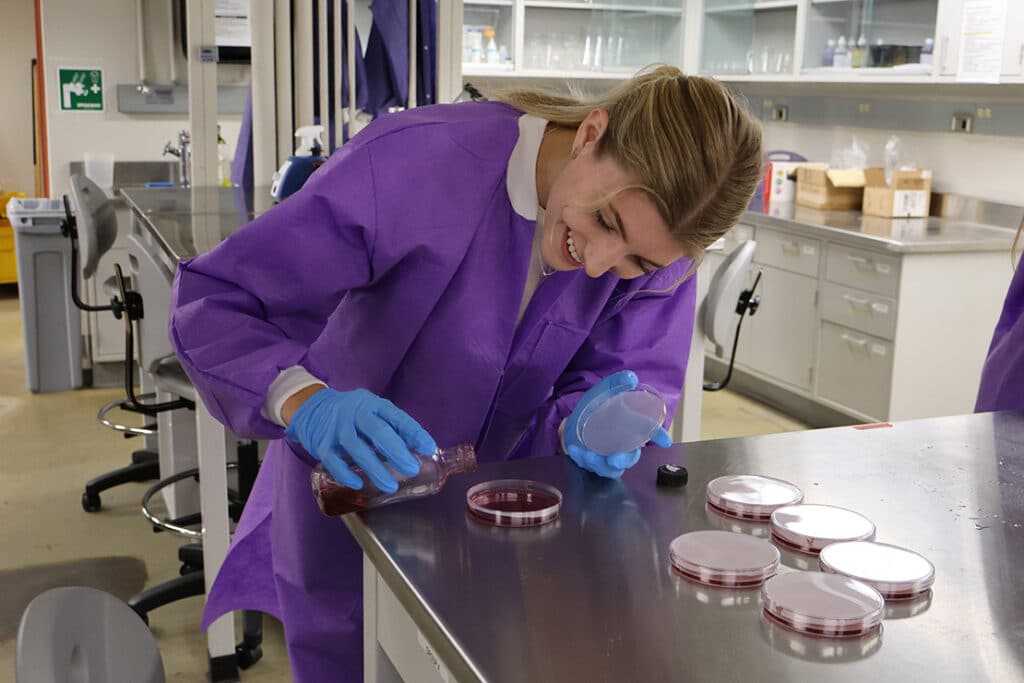
Hands-on learning is an integral component of the food science program. Students have multiple opportunities to engage in out-of-the-classroom learning through lab spaces, such as the Sensory Lab.
The Sensory Lab, located in the Food Science Building, enables students, faculty, and staff to sample a variety of food and non-food products. Students are the driving force behind this research, specializing in research areas of sensory methodology, olfactory perception, cross-modal food perception, and texture perception and oral processing.
Unique Research Opportunities
Research within food science ranges widely among the four unique research tracks: food chemistry, quality, and wellness; food safety, security, and biotech; sensory and consumer science; and food processing and engineering.
What can you do with a degree in Food Science?
Graduates from the food science master’s program gain the knowledge and skills to advance their careers in the agriculture and food industries, working at some of the top food companies in the world, like Chick-fil-A, PepsiCo, Subway, and more.
Our alumni hold titles like sensory scientist, quality assurance technician, product development scientist, food production manager, quality control scientist, and food scientist. The program also prepares students for a PhD in food science.
Featured Courses
FDSC 430 – Sensory Evaluation of Food
Principles and procedures of sensory evaluation of food, methods of test analyses, physiological, psychological, and environmental factors affecting sensory perception.
FDSC 490 – Food Product Development
Food Science capstone course. Application of principles of food chemistry, food processing and engineering, food microbiology, food laws and regulations, sensory evaluation, and statistics in the development of a food product concept.
FDSC 511 – Integrated Food Science
Critical review of the key principles of food lipid and protein chemistry and applications, using important commodities as examples; literature review on how processing impacts microbiological quality and compositional and functional properties of food.
FDSC 516 – Food Analysis
Principles, methods and techniques for qualitative and quantitative analyses of composition and physical, chemical, and biological properties of food and food ingredients.
Admissions and Aid
Learn more about admissions and aid by visiting the links below.