
Environmental and Soil Science, MS
The Master of Science in Environmental and Soil Science further develops skills in natural sciences, as well as applied areas such as ecology and soil sciences. With a thesis and project-based option, students gain a unique, valuable education in environmental and soil sciences.
Program Overview
Through the environmental and soil science master’s program, students receive an assortment of knowledge and skills, such as using modern technologies like geographical information systems, global positioning systems, and computer applications in natural resource management.
Students pursue areas of study in soil and water chemistry, nutrient and elemental cycling, land management and reclamation, pedology, genesis and classification, environmental climatology, soil biology and biochemistry, and soil physical processes.
Concentrations
Students in this degree program pursue a general education in environmental and soil science with options for a thesis or project track.
Why study Environmental and Soil Science?
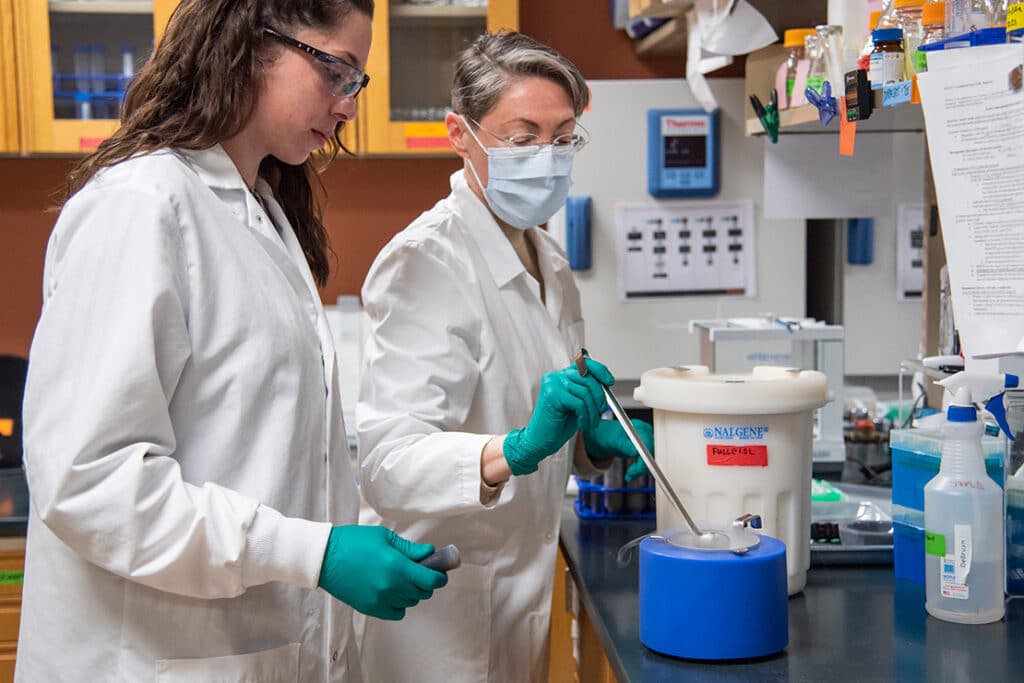
Hands-On Learning
Hands-on learning is an integral component of the environmental and soil science program.
Graduate students gain real-world experiences through field trips and labs, expanding learning outside the classroom.
A Versatile Degree
Environmental and soil science is one of the broadest and most versatile advanced degrees within the Herbert College of Agriculture. Students take courses in the areas of science, agriculture, soils, leadership, communications, and more to gain the skills needed to set themselves apart in the agricultural and science fields.
Innovative Research
The Department of Biosystems Engineering and Soil Science offers many different research pathways for students to complete cutting-edge research projects. Through the thesis track program, students can pursue research in soil conservation and health, hydrology and water management, waste management, bioprocessing and biomass conversion, power and machinery, instrumentation, sensors, and control systems.
What can you do with a degree in Environmental and Soil Science?
Environmental and soil science prepares students for many careers in agriculture and natural resources. Graduates have pursued successful careers as soil and environmental specialists and scientists, state and federal regulatory agency workers, private consultants in environmental and agricultural areas, and positions with non-governmental organizations with interests in agriculture, environment, and natural resources. Students receiving this degree are also competitive for placement in PhD programs in the environmental and soil sciences.
Featured Courses
ESS 434 – Environmental Soil Chemistry
Composition and chemical properties of soils and processes that govern fate and behavior of chemicals in soil environment. Topics include – clay mineralogy; soil organic matter; mineral weathering and stability; aqueous speciation; surface chemistry; ion exchange, adsorption, and molecular retention; oxidation-reduction; and soil acidity, alkalinity, and salinity.
ESS 462 – Environmental Climatology
Study of global energy budget, past climates, climate variability, climate distribution, and climate change. Emphasis on global warming and its potential impacts on ecosystems, societies, and global sustainability. Students are required to apply quantitative, computer, and oral communication skills to analyze and report climate data for environmental planning.
ESS 511 – Soil-Plant Nutrient Cycling in Managed Ecosystems
Principles of nutrient cycling and soil exchange processes affecting nutrient availability to plants; management of soil nutrients to optimize crop growth; environmental implications of nutrient management; effects of both traditional and non-traditional nutrient amendments; and constraints to measuring plant-available nutrients in the soil.
ESS 515 – Soil and Environmental Biogeochemistry
Soils are the interface between the biosphere, hydrosphere, atmosphere, and geosphere. Soil and environmental biogeochemical interfaces: cycles of critical elements, coupled biogeochemical cycles, feedbacks between biogeochemistry, climatology, ecology, and soil science.
ESS 516 – Microbiology in the Anthropocene
The Anthropocene is defined as: the period of time during which human activities have had an environmental impact on the Earth. This course will explore how Earth’s microbiome has responded to human activities that have had significant environmental impacts such as temperature, acidification, moisture availability, toxins/nutrients/pollution exposure, etc.
ESS 574 – Environmental Instrumentation and Monitoring
Equipment and techniques commonly used to measure all aspects of hydrologic cycle: precipitation, runoff, streamflow, subsurface water movement. Sampling of all flows for contaminants. Design of monitoring systems. Analysis of data.

Admissions and Aid
Learn more about admissions and aid by visiting the links below.