
Forestry, MS
The Master of Science in Forestry develops a deeper understanding of the management of the broad spectrum of natural resources, including forest biology, forest business management, forest economics, forest inventory, restoration and conservation science, urban forestry, and wildland recreation.
Program Overview
The forestry master’s program develops skills in multiple forestry disciplines through education in areas of forestry, ecology, soil and water, and wildlife. With a large emphasis on hands-on learning, students engage in many non-traditional learning opportunities and focus on multiple forestry disciplines, such as wood science or forest business.
The School of Natural Resources offers a wide range of research opportunities to choose from, providing unique educational experiences for each student. This program provides an all-encompassing education and prepares graduates to advance their careers in forestry, agriculture, and natural resources.
Concentrations
There are two optional concentrations for the forestry master’s program: bio-based products and wood science and technology, and forest business. Students can also pursue a general master’s degree in forestry if they choose not to declare a concentration.
Why study Forestry?
Forest Land for a Classroom
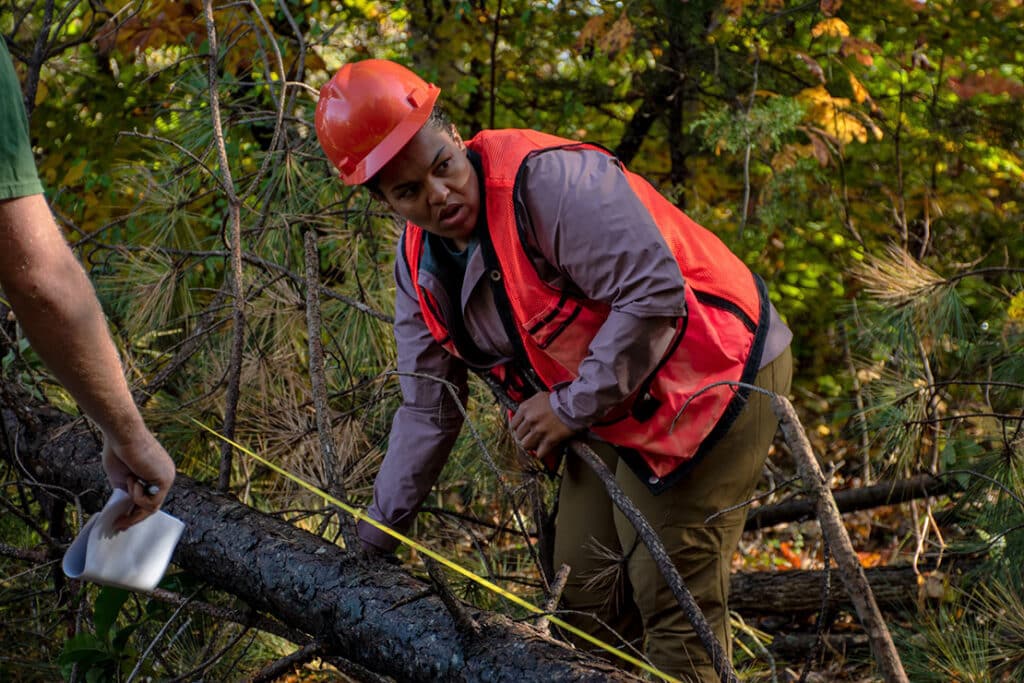
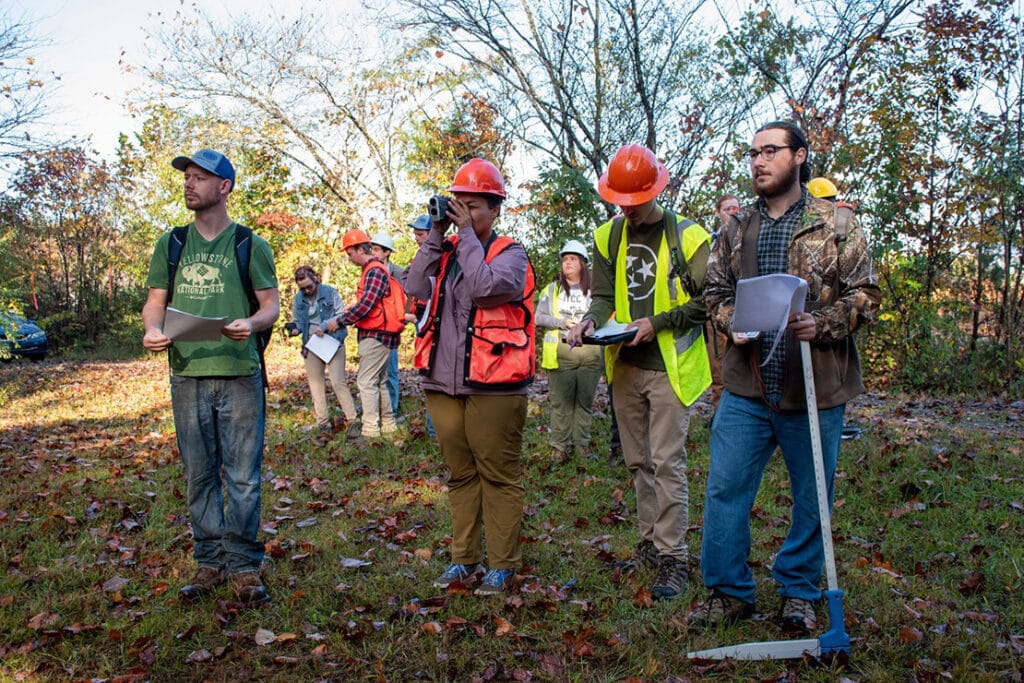
Learning outside the classroom is an integral part of the forestry master’s program. Labs in the forestry program differ from most, with over 21,000 acres of forest land serving as their laboratories and available for teaching, research, and demonstration.
Impactful Research
Multiple, diverse research pathways exist for students to pursue in this program. With research areas in forestry, urban forestry, and wood science, students take advantage of a variety of specialized research opportunities that positively impact surrounding forest lands.
Flexible Degree Opportunities
There are four different forestry master’s degree pathways to fit each student’s needs. Through the general forestry master’s program, students can either pursue a thesis track or a coursework-only track. The bio-based products and wood science and technology concentration offers a thesis option for students to develop and defend a written research plan to their advisory committee. The forest business concentration is a coursework-only option to fit a non-research pathway for graduate students.
What can you do with a degree in Forestry?
A master’s degree in forestry prepares graduates to advance their skills and pursue thriving careers in agriculture and natural resources. Graduates become foresters, wildland firefighters, silviculturalists, forest rangers, arborists, and more. Students who earn this degree are also competitive for placement in PhD programs in forestry and natural resources.
Featured Courses
FORS 514 – Tree Physiology
Tree structure, growth and development, and function, and how these are related to the environment and cultural practices. Influence of environmental variables on plant growth and distribution; effects of forest management practices on growth and function.
FORS 530 – Advanced Forest Resource Management
Analysis of forest management problems in public and private organizations. Classical forest regulation; linear and goal programming, as applied to resource management problems; advanced forest investment analysis; decision-making methods for primary forest management activities; and methodologies for incorporating non-timber values in forest management operations.
Admissions and Aid
Learn more about admissions and aid by visiting the links below.