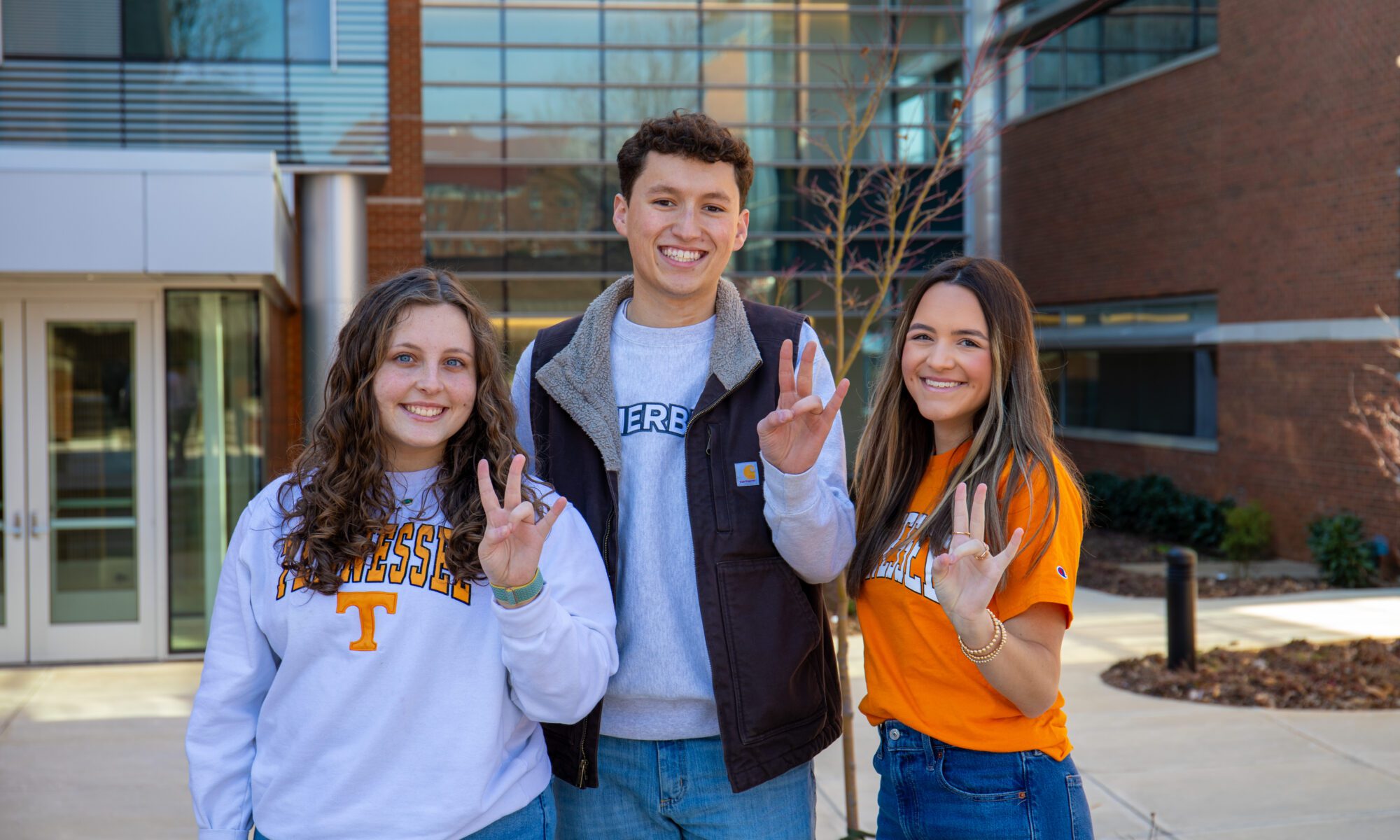
Herbert students and AFA representatives (left to right): Caroline Brack, George Wilson, and Grace Dunseth. Photo by Celina Menard.
Agriculture Future of America (AFA) provides valuable opportunities for college students through its student leader teams. This year, the Herbert College of Agriculture boasts three undergraduate students serving in different leadership capacities for AFA.
Agricultural leadership, education, and communications student Grace Dunseth and animal science student George Wilson serve on the 2026 National Student Advisory Team. As advisors, they help plan six AFA Leader Institutes leading up to the AFA Leaders Conference, held each November. At the conference, they play an active role in facilitating a specific track, along with the opening and closing sessions.
Wilson and Dunseth viewed joining the student advisory team as a way to give back. Wilson said, “We have seen so many students make an impact on the agriculture industry through this program, including our own Callie Robinson, and knew we needed to be next.” He continued, “Working alongside our team to facilitate institutes and work towards the AFA Leaders Conference this year has given us opportunities to grow professionally and personally.”
Selected from AFA’s most competitive application pool to date, environmental and soil sciences student Caroline Brack represents Herbert as an AFA ambassador, helping market AFA experiences, industry opportunities, and campus engagement.
Like Brack, Wilson served as an AFA ambassador in 2025, promoting AFA opportunities through tabling, organizing meetings, speaking about AFA in first-year studies classes, and interacting with industry professionals off campus. He said, “It was very impactful for me to work on my skills in galvanizing others and relationship development through connecting with students to inform them about Agriculture Future of America and its leadership development programs.”
Student leadership teams create a mutually beneficial partnership between AFA and college campuses, allowing students to champion its programs while gaining valuable skills and networks. “AFA has given me more than just professional development; it has given me a network of peers and professionals that care about the agricultural industry,” Wilson said. “It has challenged me to think on a broader scale, communicate more confidently, and lead with intention.”
To those considering engaging with AFA, Wilson said, “I would always encourage a student to get involved with Agriculture Future of America because it can help you discover where you fit in agriculture and give you the toolbox to become the best version of yourself.”
Herbert is proud of its three AFA student representatives—not only for achieving these roles, but for using their voices to promote agriculture and connect more students with growth opportunities through AFA.